Name hatred, anger and resentment more accurately.
Le Village prépare la prochaine escale…
 Le Buntu VillageRead, discuss, pass on
Help readers understand anger, resentment and forgiveness as part of a path towards inner freedom.
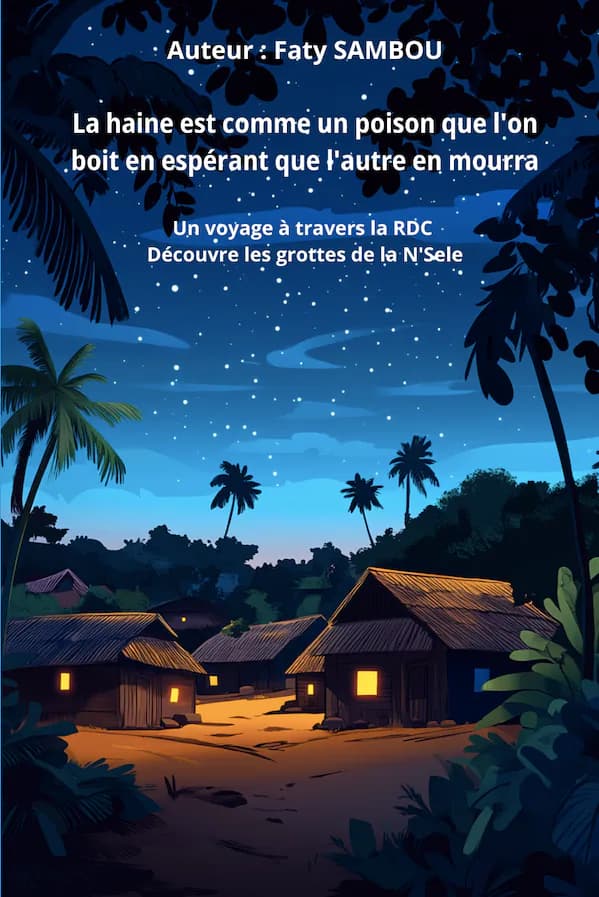
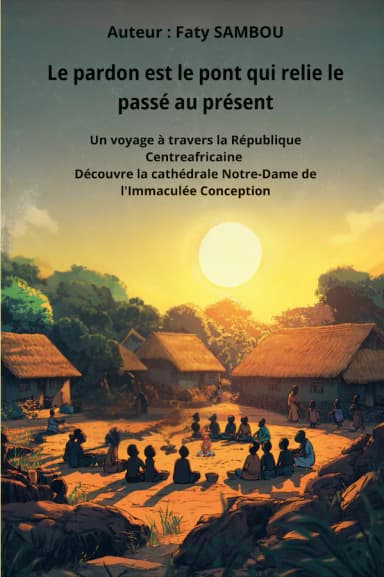
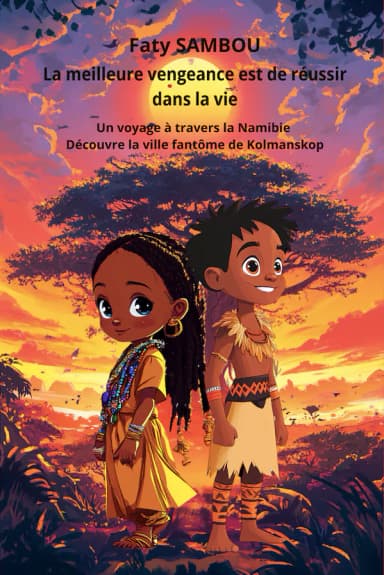
In the N’Sele caves, Kibwe and Lumumba discover that hatred first traps the person carrying it. In Bangui, Akono and Ndélé learn that forgiveness does not erase the past but makes it possible to cross it differently. In Kolmanskop, achievement finally offers a more constructive answer than revenge.
The three stories respect the time needed between hurt and relief. They do not present forgiveness as compulsory forgetting: they help readers name anger, understand the burden of resentment and choose an action that protects the future. The journey opens a deep conversation without minimising what caused pain.
The child's goal, translated into concrete progress.
Name hatred, anger and resentment more accurately.
See forgiveness as a form of strength rather than weakness.
Transform the energy of hurt into constructive motivation.
The suggested order turns the pack into a mini-journey: start from a simple situation, then open the conversation towards the central value.
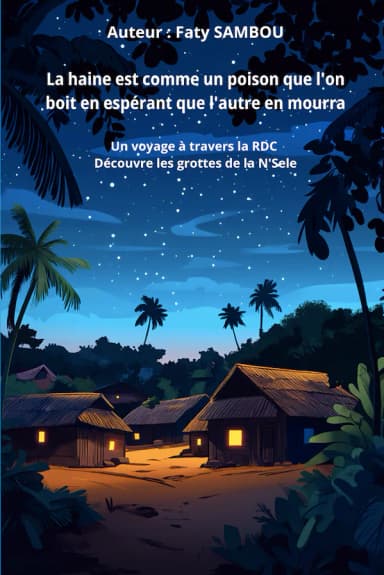
DR Congo – N'Sele Caves
In the N’Sele caves, Kibwe and Lumumba search for freedom within.
In the story, near Kinshasa, Kibwe and Lumumba explore the mysterious N’Sele caves with their aunt Nzola. Wise and loving, she helps them hear what the album's imagined motifs tell beyond words. A hurt and the anger it causes suddenly give the visit personal meaning. The children discover that hatred is like an invisible chain: while meant to reach someone else, it mainly holds the person carrying it. Guided towards understanding, forgiveness and the choice to love, they glimpse a freedom that begins with peace restored within.
Question after readingWhat can you do with anger so that it does not become a chain?
Central African Republic – la cathédrale Notre-Dame de l'Immaculée-Conception
In Bangui, a wise woman shows Akono and Ndélé how to cross beyond the past.
Akono and Ndélé grow up beneath the baobabs of the Central African Republic, sharing games, laughter and a close sibling bond. A family journey takes them to Bangui and the Cathedral of Our Lady of the Immaculate Conception. There they meet Madame Odile, a wise woman who describes forgiveness as a bridge between past and present. Her words become real when hurt enters their own lives. The siblings must choose between carrying resentment and beginning to repair. They learn that forgiveness does not erase the past, but makes a different future possible.
Question after readingWhat is the difference between forgiving and forgetting?
Namibia – Kolmanskop ghost town
In the ghost town of Kolmanskop, revenge takes on a different meaning.
Nala and Tumo live with their family in Namibia’s vast landscapes. One day, their father takes them to Kolmanskop, a ghost town once enriched by diamonds. In buildings reclaimed by sand, they meet Olda, an old man who speaks about success and revenge. His words invite them not to let past hurts decide their future. Knowledge, perseverance and resilience can turn angry energy into a life project. The children learn that succeeding in order to grow is better than living to make someone else pay.
Question after readingHow can a disappointment become strength for moving forward?
Ask them after the journey without expecting one single correct answer.
How does resentment affect the person who keeps carrying it?
What is the difference between forgiving, forgetting and reconciling?
How could a hurt become energy for building something better?
Each story can be read independently. The suggested order nevertheless creates a progression: begin with an accessible situation, deepen the reflection and then connect the stories with the pack’s central value.
It contains 3 printed books and therefore 3 complete stories. The covers and book pages shown above correspond to the titles included in the selection.
Recommended uses include pre-teen, mediation, emotional workshop. The discussion questions work for individual reading, families, classrooms and workshops.
Pre-teen · Mediation · Emotional workshop